About Us
Who we are
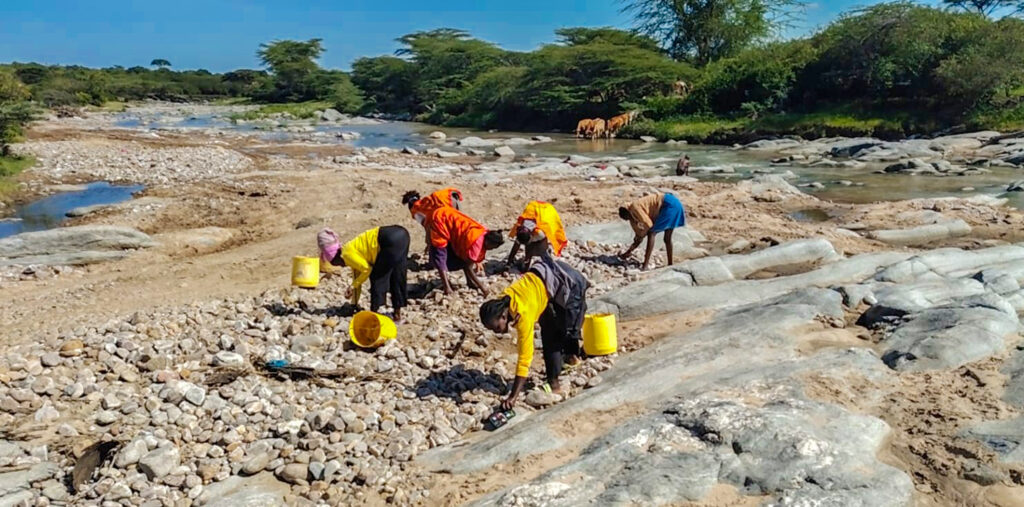
Sekenani Smallholder Community Group (SSCG-Kenya) is a community-based social organisation rooted in the Sekenani area of Narok County, Kenya, working within traditional Maasai community structures to promote conservation of indigenous flora while creating sustainable livelihood opportunities for local households.
Located at the eastern edge of the Maasai Mara ecosystem, Sekenani is home to Maasai pastoralist communities whose livelihoods have traditionally combined livestock keeping with small-scale farming and, increasingly, tourism-related opportunities linked to the Maasai Mara National Reserve and neighbouring conservancies.
SSCG-Kenya’s work is built around a simple principle: conservation and community livelihoods should reinforce each other.
Our story
SSCG-Kenya emerged from a growing recognition of the environmental and economic pressures facing communities around Sekenani.
The area’s indigenous vegetation has traditionally played an important role in community life. Plants and trees such as Leleshwa, Acacia species, medicinal shrubs and native grasses provide forage, shade, fuelwood, building materials and other resources that support both livestock and household wellbeing.
However, this natural resource base is under increasing pressure from population growth, subdivision of group ranch land, charcoal burning, overgrazing and increasingly unpredictable rainfall associated with climate variability.
At the same time, many households continue to depend heavily on livestock and seasonal tourism-related income, which can be uneven and vulnerable to changing economic and environmental conditions.
SSCG-Kenya seeks to respond to these interconnected challenges by creating an approach in which protecting indigenous vegetation can also create economic opportunity for the communities that depend on it.
Our focus on Leleshwa
At the centre of SSCG’s approach is Leleshwa (Tarchonanthus camphoratus), an indigenous plant already deeply connected to Maasai daily life.
The concept note identifies traditional uses of Leleshwa that include fuel, natural insect repellent, hygiene and household applications. Its leaves and wood also have potential for value addition when harvested sustainably.
Rather than allowing Leleshwa to be lost through destructive harvesting, SSCG-Kenya is developing a model based on cultivation, sustainable harvesting, processing and organised marketing.
The proposed enterprise will support community members to cultivate Leleshwa alongside existing farming and grazing systems, establish nurseries, develop sustainable harvesting practices and process harvested material into value-added products, including essential oil.
The objective is to create an economic incentive for communities to maintain and restore the indigenous vegetation on which the enterprise depends.
Our community-led approach
SSCG-Kenya’s work is rooted in community participation and existing Maasai governance structures.
The organisation recognises the role of age-set elders’ councils, women’s groups, youth and local community leadership in shaping decisions about natural resources and livelihoods.
Women and young people are deliberately included in the proposed enterprise and its leadership structures. The model also places farmers and participating households at the centre of cultivation, harvesting and supply.
The proposed governance structure includes an elected Management Board, community leadership, field extension personnel, trained youth plant operators, a sales and marketing focal point and farmer cluster representatives.
This approach is intended to ensure that decisions about pricing, benefit sharing, enterprise management and conservation reinvestment remain transparent and connected to the community.
Conservation and livelihoods together
For SSCG-Kenya, conservation is not treated separately from economic development.
The proposed model follows a connected cycle:
Conserve → Cultivate → Harvest Sustainably → Process → Market → Generate Income → Reinvest in Conservation
Through this model, the community can derive value from an indigenous resource without relying on destructive extraction.
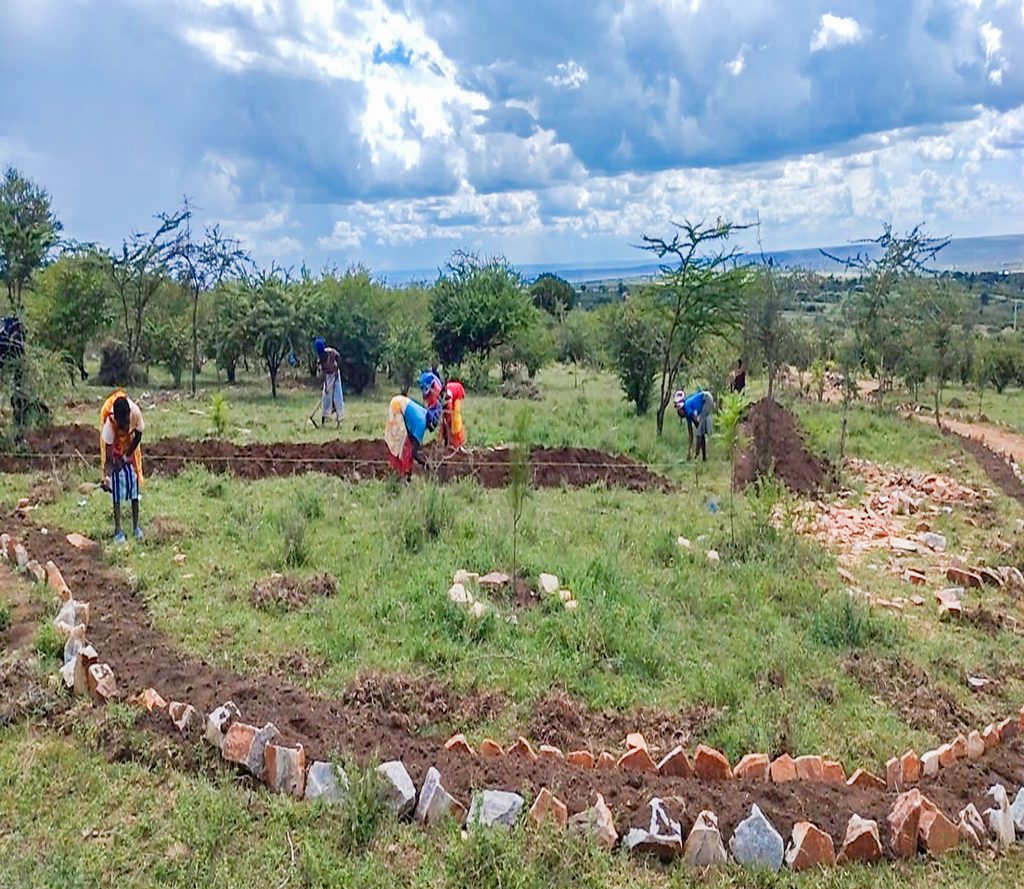
The project proposes participatory mapping of indigenous flora, establishment of a community seed bank, conservation areas with agreed grazing-rest periods, enrichment planting and community nurseries producing Leleshwa and companion species.
At the enterprise level, members would supply weighed and dried Leleshwa material for processing, with transparent pricing and payment arrangements established through community governance structures.
Building a sustainable community enterprise
SSCG-Kenya is developing a community-owned enterprise model that links local production to processing and markets.
The proposed processing pathway begins with small-scale shared distillation for pilot batches and quality testing before progressing towards a centralised community-owned steam distillation facility.
The enterprise is intended to develop a branded Leleshwa product line for potential wellness, export and Maasai Mara tourism markets.
The project also seeks to diversify markets rather than depend on a single buyer, with potential channels including national retail, export markets, safari lodges, camps and tourism-related outlets.
Learning from an established Kenyan Model
SSCG’s proposed approach is informed by the experience of the Muliru Farmers Conservation Group, an Equator Prize-winning Kenyan community enterprise near Kakamega Forest.
According to the concept note, Muliru demonstrated how an indigenous plant can be cultivated, processed through a community-owned facility and marketed as branded products while supporting conservation and household livelihoods.
SSCG-Kenya seeks to adapt this cultivate–process–market–reinvest approach to a different ecological and socio-economic setting: the rangelands and pastoralist communities of the Maasai Mara.
The proposed adaptation is centred on Leleshwa, integration with livestock grazing systems and access to the distinctive tourism economy around the Maasai Mara.
Our Commitment to Women and Youth
Women and youth are an important part of SSCG-Kenya’s community-centred approach.
The project proposes their participation across conservation, farming, enterprise and leadership activities. Youth can participate in areas such as nursery management, field extension, processing and plant operations, while women’s groups are deliberately incorporated into participation and leadership structures.
The objective is to ensure that opportunities created through conservation and enterprise development are accessible across the community rather than concentrated in a single group.
Vision for the future
SSCG-Kenya seeks to develop a practical and sustainable model in which indigenous biodiversity conservation and community economic development work together.
The immediate focus is Sekenani and the Maasai Mara landscape, but the longer-term ambition is broader: to document the experience and develop a model that other communities, group ranches and conservancies facing similar environmental and livelihood pressures can adapt.
Through conservation, sustainable agriculture, community enterprise, scientific monitoring and knowledge sharing, SSCG aims to demonstrate how an indigenous resource can become a source of both environmental stewardship and sustainable livelihood opportunity.

Mission
To conserve indigenous rangeland ecosystems while empowering local communities to develop sustainable livelihoods through responsible natural-resource-based enterprises.
Vision
A resilient Maasai Mara landscape where indigenous biodiversity is conserved and communities prosper from sustainable livelihoods.
Goal
Lorem ipsum dolor sit amet, consectetuer adipiscing elit. Aenean commodo ligula eget dolor. Aenean massa. Cum sociis natoque penatibus et magnis dis parturient montes,